
Permissioned Pulls: Solana's New Authorization Layer for Subscriptions and Allowances
How Solana's subscriptions program works: a standalone, audited program that lets a token holder grant a bounded, revocable right to pull funds — capped by amount, period, and destination. The full anatomy, a merchant build walkthrough, and an honest accounting of what it doesn't do.
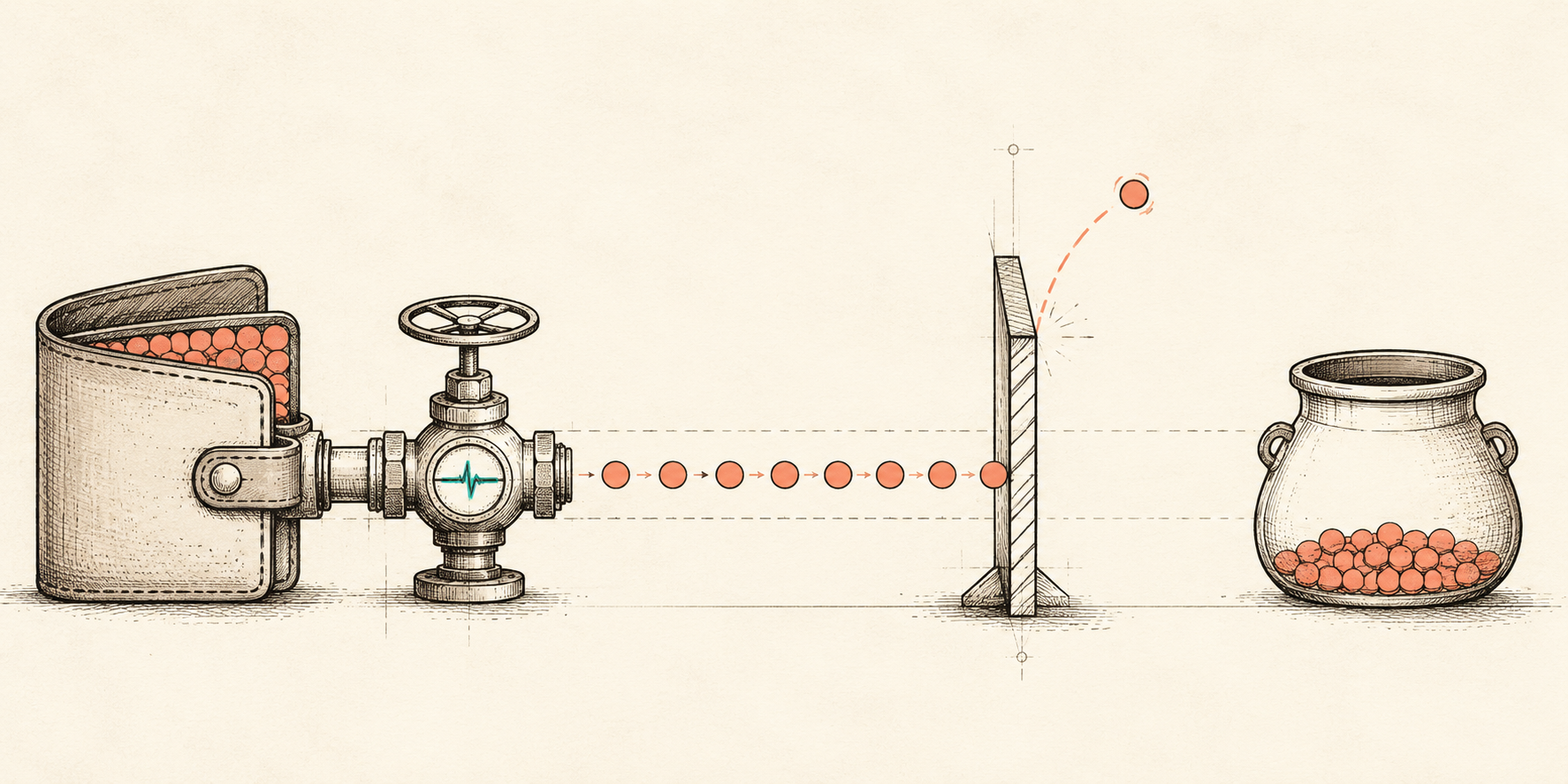
Sometime around June 3, 2026, a program quietly went live on Solana mainnet at address De1egAFMkMWZSN5rYXRj9CAdheBamobVNubTsi9avR44. Most of the coverage since has filed it under “recurring payments,” which is the least interesting and least accurate way to describe it. What actually shipped is an authorization layer: a shared, audited, public primitive that lets a token holder grant someone else a bounded right to pull funds — capped by amount, capped by period, restricted by destination, revocable at will — without handing over a key, signing every charge, or trusting a custodian.
Solana’s subscriptions program is a standalone, Cantina-audited on-chain primitive that lets a token holder grant a bounded, revocable right to pull funds — capped by amount, by period, and by destination — without surrendering a key, signing every charge, or trusting a custodian. That is the whole idea; everything below is the anatomy of how it holds.
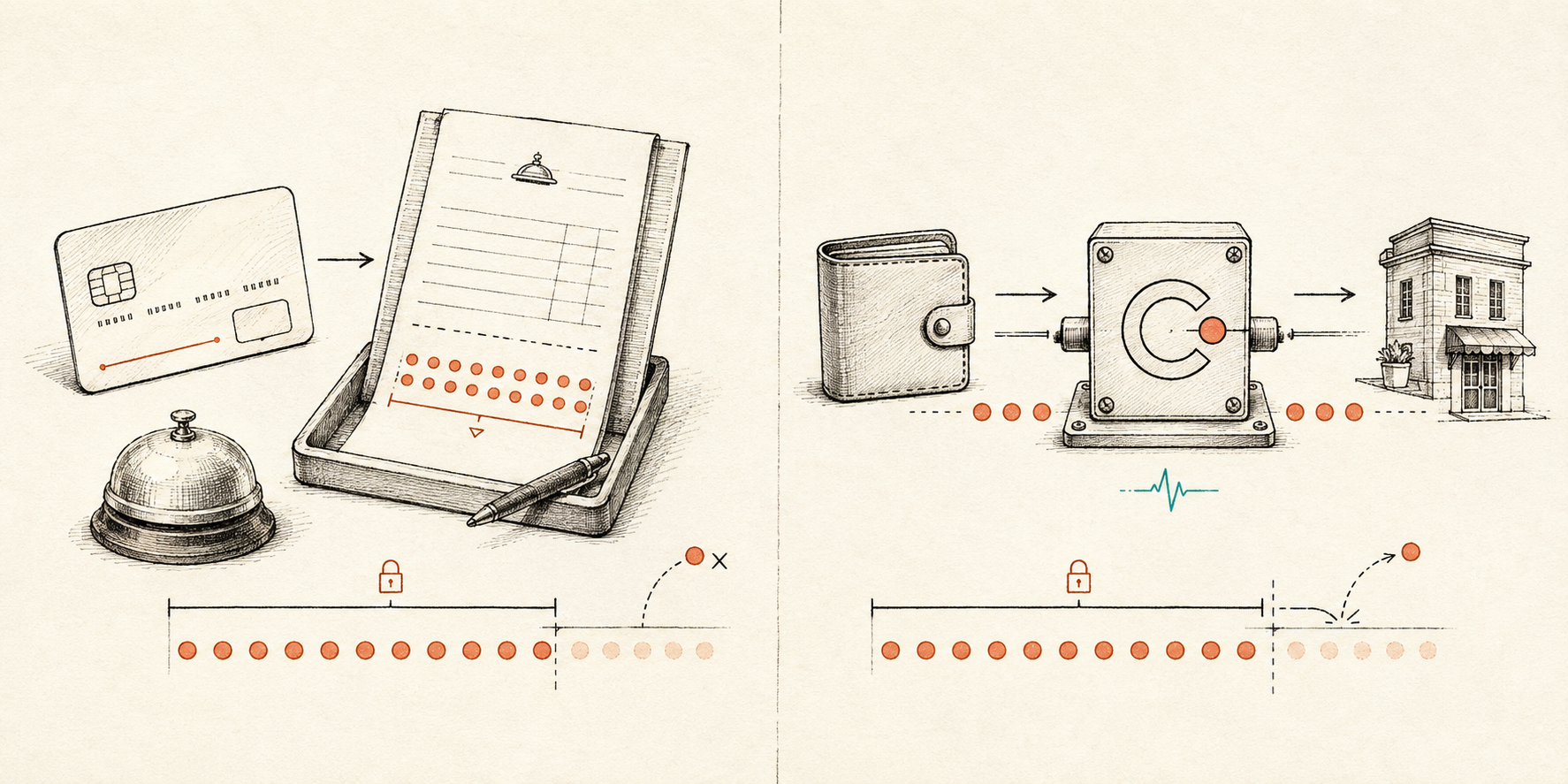
If you want a mental model, it’s the card-network pre-authorization model without the card network. When you hand a hotel your card, you’re not paying; you’re granting a scoped pull right that the merchant can exercise later, inside limits, with a dispute trail. This program puts that exact relationship on-chain: the subscriber signs once to authorize, the merchant pulls later, and a program — not a promise — enforces the bounds on every single pull. One limit on the analogy before leaning on it: cards carry dispute, chargeback, and legal rails behind that pre-auth, and this primitive models only the bounded-authorization half — refund policy lives a layer up, with the merchant.
Before going further, two myths need to die, because they dominate the early commentary and both are flat wrong:
Myth one: “It’s a Token-2022 extension.” No. This is a standalone Solana program — separate program ID, separate deployment — that works with SPL Token and Token-2022 via CPI. It is easy to confuse with Token-2022’s PermanentDelegate extension because both involve delegation, but they are unrelated mechanisms. PermanentDelegate is a property of a mint; this is a program any holder of any compatible token can opt into, per account, reversibly.
Myth two: “Solana changed the protocol for this.” Also no. There is no SIMD here, no validator upgrade, no consensus change, nothing to do with Alpenglow or any other protocol-level work. This is a userspace deploy: a program built by Moonsong Labs with the Solana Foundation, written with Anza’s Pinocchio framework (zero-dependency, no-std Rust), and audited by Cantina. (You’ll see “audited by Spearbit” in some write-ups — outdated; Cantina, the merged entity, is correct. You’ll also see the name “multi-delegator” floating around — that’s the old internal name, surviving only in the audit PDF and a redirect.)
What follows is the full anatomy — the three account types, who signs what, the complete life of a single $5/month pull, the scary-looking u64::MAX approval and why it isn’t what it looks like — then a concrete build walkthrough with the TypeScript SDK, and an honest accounting of what the program deliberately does not do.
The anatomy: three accounts, three authorization types
The entire system rests on three PDA types. Each one exists to answer a different question, and the design makes more sense once you see which question each account answers.
1. SubscriptionAuthority PDA — “who is allowed to move my tokens at all?”
Seeds: ["SubscriptionAuthority", user, tokenMint] — note the literal CamelCase seed string (the SDK exports it as SUBSCRIPTION_AUTHORITY_SEED; every other seed in the program is lowercase).
The seeds contain the user and the token mint — one PDA per (user, mint) pair, not one per user. When the user enrolls for a given mint, that mint’s PDA is approved as the single token-account delegate on the user’s token account for that mint, with a u64::MAX approval. That’s the program’s one-time handshake with the token program: instead of the user approving each merchant individually at the token layer (SPL Token only supports one delegate per account anyway), the user approves this one program-controlled PDA once, and all subsequent permission logic moves up into the program where it can be expressive. The SubscriptionAuthority PDA is the hands — it signs the actual CPI transfers — but it has no judgment of its own. Every pull it executes must first pass the program’s full gate sequence (below). More on the u64::MAX optics shortly, because it deserves an honest treatment.
2. Plan PDA — “what are the terms?”
Seeds: ["plan", owner, plan_id_le]. Size: 491 bytes (the SDK exports it as PLAN_SIZE = 491: discriminator 1 + owner 32 + bump 1 + status 1 + plan data 456).
This is the merchant’s published offer: the mint, the amount per period, the period length, the destination accounts, the pullers allowed to trigger charges. Critically, the plan’s core billing terms — amount, period, mint, destinations — are immutable after creation. A merchant cannot create a “$5/month” plan and quietly turn it into “$50/week.” What can be updated post-creation: the plan’s status, its end_ts, its puller list (up to 4), and its metadata_uri. This split is landmine number seven in the wild — “terms are updatable” is a misleading claim you’ll see; only the operational fields are, never the financial ones.
3. SubscriptionDelegation PDA — “what did this subscriber agree to, and where do they stand?”
Seeds: ["subscription", plan_pda, subscriber]. Size: 155 bytes — a 107-byte header, 24 bytes of snapshotted plan terms, then three live counters: amount_pulled_in_period (u64), current_period_start_ts (i64), and expires_at_ts (i64, where 0 means active).
This account is each subscriber’s individual ledger against the plan, and the 24-byte terms snapshot is the most important design decision in the whole program — it’s the ghost-account defense, covered below. The live counters are what make the cap enforceable: the program knows exactly how much has been pulled in the current period and when that period started, so it can reject any pull that would exceed the agreed amount.
Here’s the relationship between all the pieces:
  Merchant wallet ──creates/owns──►  Plan PDA (491 bytes)
                                     seeds: ["plan", owner, plan_id_le]
                                     amount/period/mint/destinations IMMUTABLE
                                          ▲
                                          │ references + snapshots terms (24 bytes)
                                          │
  Subscriber wallet ──signs──►  SubscriptionDelegation PDA (155 bytes)
        │            subscribe  seeds: ["subscription", plan_pda, subscriber]
        │                       amount_pulled_in_period / current_period_start_ts
        │                       expires_at_ts (0 = active)
        │
        ├──owns──►  Token account (USDC, etc.)
        │              delegate = SubscriptionAuthority PDA, approved u64::MAX
        │                                   ▲
        └──one-time enroll──────────────────┘
                    SubscriptionAuthority PDA — one per (user, mint)
                    seeds: ["SubscriptionAuthority", user, tokenMint]
                    signs the actual CPI transfers — but only after
                    the program's gate sequence passes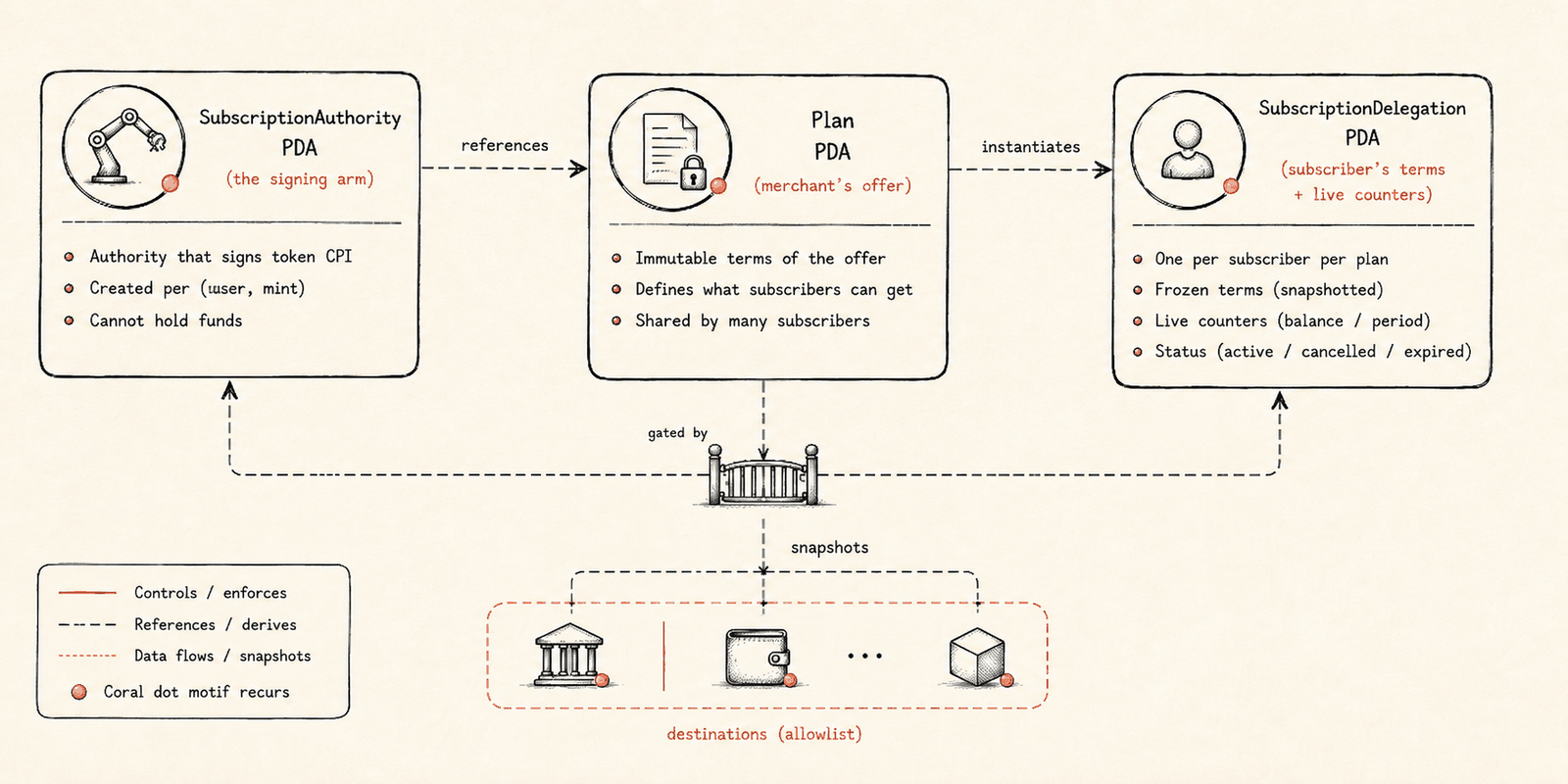
Three authorization types, one program
Subscription plans are actually the third of three authorization shapes the program supports. The other two come from the program’s direct-delegation instruction set (the ADR-001 set: initSubscriptionAuthority / closeSubscriptionAuthority, createFixedDelegation / createRecurringDelegation, transferFixed / transferRecurring, revokeDelegation):
| Type | Shape | Cap semantics | Built for |
|---|---|---|---|
| Fixed delegation | One-shot grant | Cumulative cap + optional expiry | AI agent budgets, card-style pre-auth holds |
| Recurring delegation | Repeating grant | Per-period cap that resets; period in seconds (periodLengthS); overall expiry | Payroll, allowances, fine-grained metering |
| Subscription plan | Merchant-published, many subscribers | Plan terms snapshotted per subscriber; per-period cap | SaaS billing, memberships |
The signing split is consistent across all three and is the part to internalize: the subscriber signs setup, cancel, and resume. The merchant — or one of up to four whitelisted pullers — signs each pull, and pays the transaction fee for it (~5,000 lamports per pull). The subscriber is never asked to sign a charge. That asymmetry is the whole point: authorization is granted once and bounded forever after; execution is the payee’s problem.
The subscription-plan instruction set, with discriminators: create_plan (7), update_plan (8), delete_plan (9), transfer_subscription (10), subscribe (11), cancel_subscription (12), resume_subscription (13).
The life of one $5/month pull
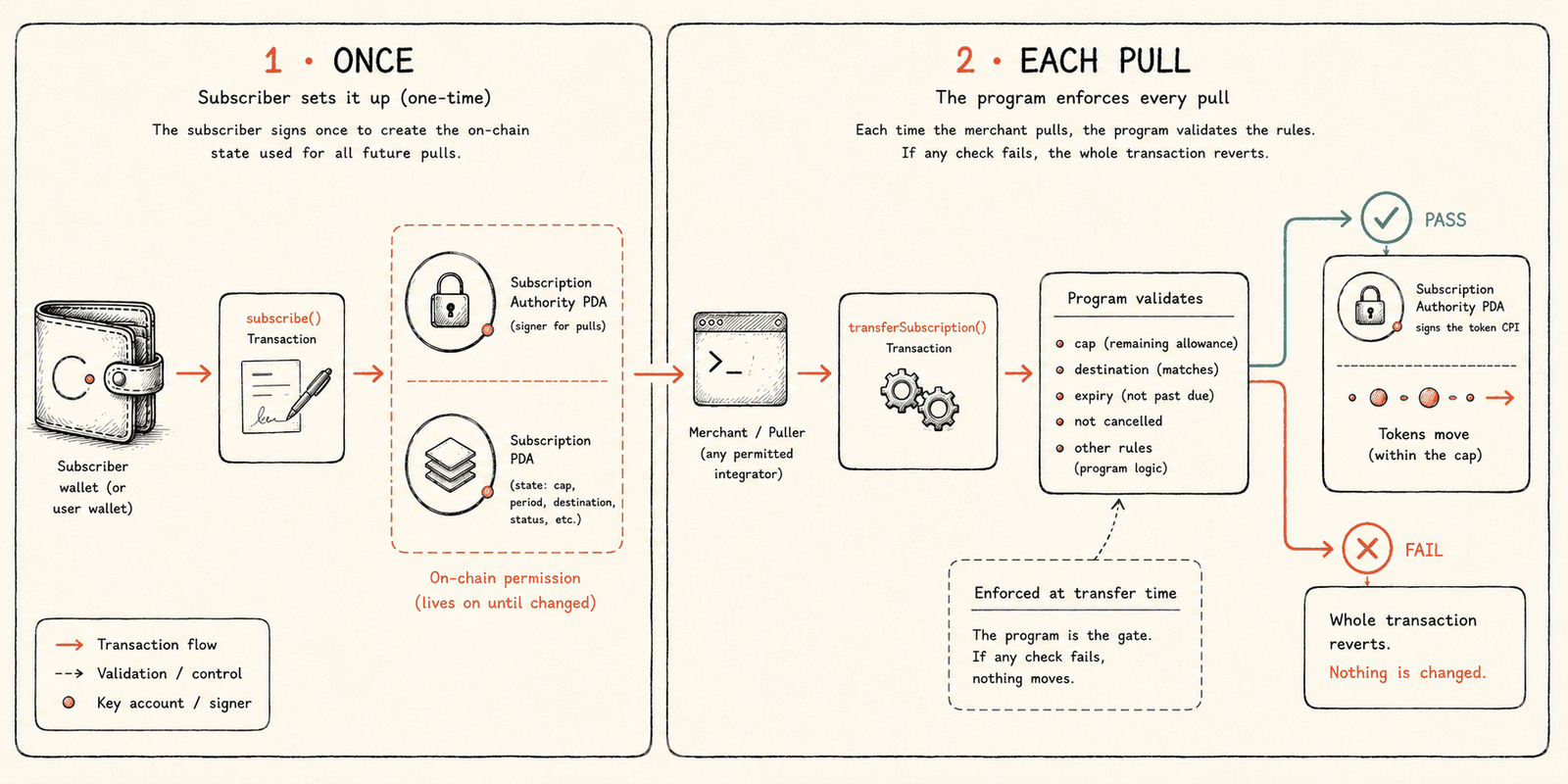
Say a subscriber holds USDC and has subscribed to a merchant’s $5/month plan. A month passes. The merchant’s billing infrastructure (more on whose infrastructure in the tradeoffs section) submits a transfer_subscription instruction. Here is everything that happens before a single token moves — the full gate sequence, in order:
- Program-owned check. The state accounts passed in must actually be owned by the subscriptions program. You can’t feed it look-alike accounts you fabricated.
- Mint match. The token accounts and the plan must agree on the mint. No pulling USDT against a USDC plan.
- Plan expiry check. If the plan’s
end_tshas passed, the plan is dead and the pull fails. - Caller authorization. The transaction signer must be the plan owner or one of the (≤4) whitelisted pullers. A random third party cannot trigger a charge even though the charge would go to the merchant — pull rights are themselves permissioned.
- Destination allowlist. The receiving token account must be one of the plan’s immutable destinations. Even a fully authorized puller can’t redirect funds to a fresh address.
check_plan_terms()— the ghost-account fingerprint. The terms snapshotted in the SubscriptionDelegation PDA at subscribe time (plus the plan’screated_at) are compared against the live Plan account. Any mismatch throwsPlanTermsMismatch. This is the defense against a subtle account-model attack: close a plan, recreate a different plan at the same address (same seeds), and harvest the old subscribers under new terms. The fingerprint makes the old delegations inert against the impostor — the subscriber’s agreement binds to the terms, not just the address.- Cancellation check. A cancelled subscription doesn’t pull. (Cancellation is the subscriber’s unilateral, sign-once right — and so is
resume_subscriptionif they change their mind.) - Period rollover. If
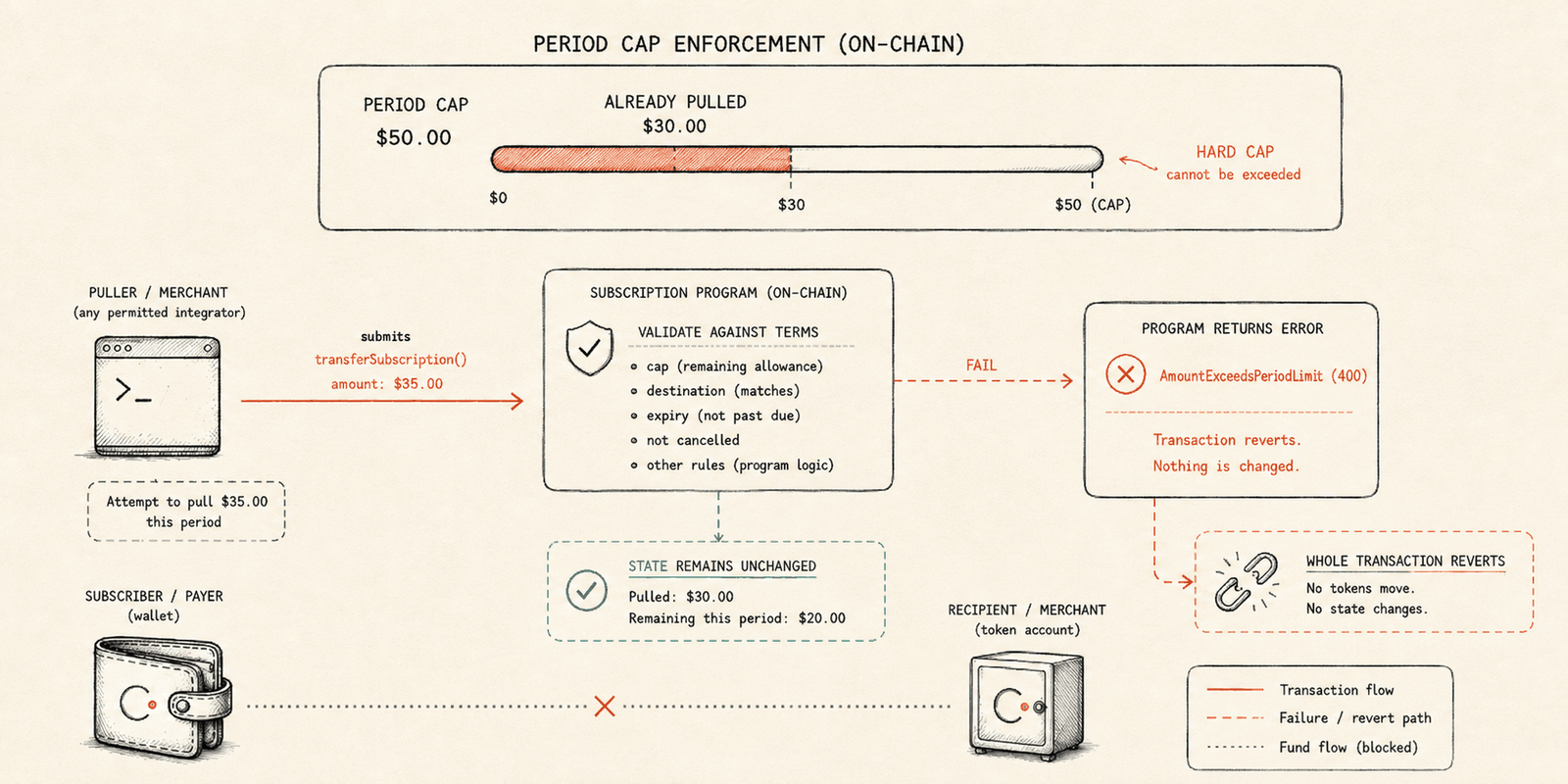
current_period_start_tsplus the period has elapsed, the program rolls the window forward and resetsamount_pulled_in_period. - Cap enforcement. The requested amount plus
amount_pulled_in_periodmust fit inside the period’s cap. The merchant can split a period’s charge into multiple pulls if they like, but the period total is a hard ceiling. - State update.
amount_pulled_in_periodand the period bookkeeping are written; in the documented flow, this state write comes before the transfer itself. - CPI transfer. Now, finally, the SubscriptionAuthority PDA signs a CPI into the token program (SPL Token or Token-2022) moving $5 of USDC from the subscriber’s token account to the allowlisted destination.
- Event emission. A
SubscriptionTransferEventis emitted via self-CPI (the["event_authority"]pattern), giving indexers a durable record. The program emitsCreated,Cancelled,Resumed, andTransferevents across the lifecycle.
As a sequence diagram:
sequenceDiagram
    participant P as Puller (merchant infra, signs + pays ~5000 lamports)
    participant SP as Subscriptions program
    participant PL as Plan PDA
    participant SD as SubscriptionDelegation PDA
    participant SA as SubscriptionAuthority PDA
    participant TK as Token program (SPL / Token-2022)

    P->>SP: transfer_subscription(amount, ...)
    SP->>SP: 1-2 program-owned + mint checks
    SP->>PL: 3-5 expiry, caller authz, destination allowlist
    SP->>SD: 6 check_plan_terms() fingerprint vs snapshot
    SP->>SD: 7-9 cancellation, period rollover, cap check
    SP->>SD: 10 update amount_pulled_in_period
    SP->>TK: 11 CPI transfer, signed by SA PDA
    TK-->>P: tokens land in allowlisted destination
    SP->>SP: 12 self-CPI SubscriptionTransferEvent (["event_authority"])
Twelve gates, one transfer. That density of validation is what lets the dangerous-looking part of the design be safe — which brings us to the elephant.
The u64::MAX paradox
When a user enrolls, their wallet will show a token-account delegate approval of u64::MAX — the maximum representable amount — granted to a PDA. Wallet UIs render this as “unlimited spending approval,” and users trained by years of ERC-20 approval-drainer incidents will, reasonably, flinch.
Here’s the honest version. The u64::MAX approval is real at the token layer, and at the token layer alone it would be unlimited. But the delegate is not a person or an externally-owned key — it’s a PDA that can only sign inside the subscriptions program, and the program will only produce that signature at the end of the twelve-gate sequence above. The effective spending power against your account is the sum of the caps in your Delegation PDAs — your $5/month subscription can pull $5 a month, full stop — and revoking a delegation or cancelling a subscription closes that path entirely. The u64::MAX exists because SPL Token’s single-delegate, single-amount approval model is too crude to express “many counterparties, each individually bounded,” so the program takes maximal token-layer authority once and re-derives all the actual limits in its own state, where they can be per-merchant, per-period, and revocable.
So the claim “this gives a program unlimited spending power over your wallet” is technically describable and substantively misleading — the correct statement is that bounded spending power is enforced one layer up, by audited program logic, gated by accounts you control. The legitimate criticism is about optics: until wallet UIs learn to render this pattern, the approval screen will scare people. That’s a real adoption problem, just not a security one.
Build it: a merchant flow, end to end
Time to make it concrete. Suppose you run a SaaS and want to bill $5/month in USDC. Devnet has a live demo at solana-subscriptions-program.vercel.app, and the program repo is github.com/solana-program/subscriptions (justfile-driven, with Surfpool for local testing). There’s no dedicated CLI yet; the TypeScript SDK is the paved road:
pnpm add @solana/subscriptions @solana/kit @solana/kit-plugin-rpc @solana/kit-plugin-signer @solana-program/tokenA note on versions, current as of publication (June 2026): @solana/subscriptions@0.3.0 is the latest stable release and is what this walkthrough targets. A v0.4.0-rc.1 pre-release landed mid-June — a release candidate, not stable — and the on-chain program itself is unchanged since its June 2 launch, so nothing here is dated by it.
Step 1 — the merchant publishes the plan. One call, from the merchant’s client:
merchantClient.subscriptions.instructions.createPlan({
  planId, mint, amount, periodHours, endTs: 0n,
  destinations, pullers, metadataUri
}).sendTransaction();
On-chain, this creates the Plan PDA at ["plan", owner, plan_id_le] — 491 bytes (PLAN_SIZE in the SDK) recording everything in that argument object. Choose carefully: mint, amount, periodHours, and destinations are now immutable for the life of the plan. endTs: 0n means no scheduled end. pullers is your operational allowlist (max 4) and can be rotated later via update_plan, as can metadataUri (point it at your plan’s display metadata) and the plan’s status.
One gotcha that will bite you exactly once: amount is in base units of the mint. For a 6-decimal token, 5_000_000 = 5 tokens — five million base units, not five. Get this wrong in the cheap direction and you’ll bill a millionth of what you meant each month; get it wrong the other way and gate 9 will at least stop you from pulling it, but your subscribers will see an alarming plan.
Step 2 — the subscriber subscribes. From the subscriber’s client:
subscribe({merchant, planId, tokenMint});This is the only signature the subscriber will ever provide for the billing relationship (until they cancel). On-chain it does two things: ensures their SubscriptionAuthority PDA is set as the delegate on their USDC token account (the one-time u64::MAX handshake discussed above), and creates their SubscriptionDelegation PDA at ["subscription", plan_pda, subscriber] — including the 24-byte snapshot of your plan’s terms that gate 6 will check on every future pull. A nice SDK detail: the TypeScript SDK auto-fetches the live plan terms during subscribe, so the snapshot is taken for you. (The Rust crate — subscriptions = "^0.1", Codama-generated — is lower-level: its SubscribeBuilder needs the terms pre-fetched and handed in.)
Step 3 — your infrastructure pulls. Each period, a signer from your pullers list submits:
transferSubscription({
  caller, delegator, tokenMint, subscriptionPda, planPda,
  amount, receiverAta, tokenProgram
});
caller is your puller, delegator is the subscriber, receiverAta must be one of the plan’s immutable destinations, and tokenProgram is whichever token program the mint lives under — SPL Token works unconditionally; Token-2022 works only for mints with a restricted extension set (the full rejection list is covered below). The instruction runs the twelve gates, moves the USDC, updates the subscriber’s period counters, and emits the Transfer event your indexer or webhook layer can consume. Your cost: roughly 5,000 lamports per pull, paid by the puller.
That’s the whole integration surface: one call to publish, one signature to enroll, one permissioned instruction per billing cycle. The on-chain part is genuinely this small. The off-chain part is where the honest conversation starts.
What it deliberately doesn’t do
The program is narrow on purpose, and the gaps are load-bearing facts for anyone planning to build on it.
There is no scheduler. This is the big one, and it’s landmine four and eight rolled together. The program does on-chain validation of pulls; it never initiates them. Nothing on Solana wakes up on the first of the month and runs your billing. Merchants run their own pull infrastructure — a cron job, a keeper service, whatever — and pay ~5,000 lamports per pull for the privilege. If you’re thinking “Clockwork solved this,” it didn’t and it can’t: Clockwork is dead, the on-chain automation gap it left is unfilled, and this program does not replace it — it solves authorization, not execution. The two are complementary layers and only one of them shipped. (The flip side: at ~5,000 lamports per pull, even a six-figure subscriber base is rounding-error infrastructure cost; the engineering burden is the real price, not the lamports.)
Token-2022 support is narrower than the headline claims — the SDK’s own error table says so. Some coverage (and even official-docs phrasing) says Token-2022 is supported “including confidential transfers.” The SDK contradicts that: @solana/subscriptions@0.3.0 ships a dedicated rejection error for each disallowed mint extension — MINT_HAS_CONFIDENTIAL_TRANSFER (118), MINT_HAS_NON_TRANSFERABLE (119), MINT_HAS_PERMANENT_DELEGATE (120), MINT_HAS_TRANSFER_HOOK (121), MINT_HAS_TRANSFER_FEE (122), MINT_HAS_MINT_CLOSE_AUTHORITY (123), MINT_HAS_PAUSABLE (124). So the honest statement is: Token-2022 mints are supported only with a restricted extension set — confidential transfer, transfer fee, permanent delegate, non-transferable, pausable, mint close authority, and configured transfer hooks are all rejected. Where docs claims conflict with these constants, trust the constants (they’re generated from the program’s IDL); the discrepancy itself is worth knowing about. The practical consequence stands, and is broader than the hook case alone: compliance-oriented tokens that express policy through Token-2022 extensions — hooks for screening, transfer fees, permanent delegates — are incompatible with this program today.
No native SOL. The program operates on token accounts, full stop. The unqualified claim “it supports SOL” is false; the accurate version is the standard workaround — wrap to wSOL and subscribe with that.
Destinations are immutable (pullers, by contrast, can be rotated). The puller list — capped at four — is updatable via update_plan, so rotating a compromised or retired puller key is routine. Destinations are the hard constraint: if you rotate your treasury — new custodian, new multisig, compromised destination key — you cannot point existing plans at the new address. Treasury rotation means sunsetting the plan and migrating every subscriber through a fresh subscribe flow. Design your destinations list with rotation in mind before you publish, because the program will not let you fix it after.
Plan periods are hour-granularity — but direct recurring delegations are not. A subscription plan’s periodHours runs 1 to 8760 — one hour to one year. Monthly SaaS billing, weekly payroll, daily allowances: all fine at the plan layer. But the hours constraint is a plan parameter, not a program-wide one: direct recurring delegations take their period in seconds (periodLengthS in the SDK), so sub-hourly — even per-minute — metering is possible if you drop down from the merchant-published-plan layer to a bilateral recurring delegation. If you need fine-grained usage metering, that’s the shape to reach for; plans stay hourly-or-coarser.
Audit scope has an edge. Cantina’s audit covers the program up to commit b4b0345f. Per the repo’s AUDIT_STATUS.md (dated 2026-04-08), main-branch commits past that point are unaudited. If you’re depositing real treasury flow on this, know which deployed code you’re trusting and where the audited boundary sits.
None of these are flaws exactly — they’re the shape of a v1 that chose to do one thing (bounded pull authorization) completely rather than five things loosely. But each one should appear in your design review.
The Canadian angle, briefly
The proven pattern to copy is API billing. Helius — the Solana RPC/API provider — is among the program’s design partners (alongside Confirmo, Dynamic, Majority, Mesh, and Meow), using it for API-tier billing: publish a plan per tier, customer subscribes once, infrastructure pulls each period, caps and cancellation enforced by the program rather than by a billing department. There is nothing region-specific about that pattern. A Canadian SaaS — your analytics startup in Toronto, your dev-tools shop in Waterloo — can implement exactly this flow today with USDC: a createPlan per pricing tier, a subscribe button in the dashboard, a puller process next to the existing billing cron. No payment processor in the pull path, subscriber-side cancellation that actually works, and a public audit trail of every charge via the event stream.
The forward-looking piece is the currency. CADD — the regulated Canadian-dollar stablecoin backed by Shopify, Wealthsimple, Shakepay, National Bank, and ATB, launched May 2026 on Base, Ethereum, and Tempo — has Solana support planned but not live, and the day it lands, every mechanism in this article works unchanged with CAD-denominated plans: the program is mint-agnostic, so “subscriptions in Canadian dollars, enforced by a program” stops being a thought experiment the moment the mint exists. Until then: the rails are live, the authorization layer is audited, and the missing piece is the CAD mint itself.
FAQ
De1egAFMkMWZSN5rYXRj9CAdheBamobVNubTsi9avR44 around June 2026.u64::MAX approval is granted to a program-controlled PDA, not a person or external key. That PDA can only sign inside the subscriptions program, and only after a twelve-step gate sequence passes. Your real spending exposure is the sum of the per-period caps in your delegations — a $5/month subscription can pull $5 a month, full stop — and cancelling or revoking closes that path. The unlimited figure exists only because SPL Token's single-delegate model is too crude to express many counterparties each individually bounded; the real limits live in the program's own state.createPlan (setting an immutable mint, amount, period, and destinations); each subscriber signs once with subscribe to authorize; then the merchant's infrastructure calls transferSubscription each billing cycle. The TypeScript SDK (@solana/subscriptions) is the paved road; there is no dedicated CLI yet.Sources
Drawn from the verified research digest for this piece (full URL list preserved in the research transcript):
- solana.com — program announcement (news) and documentation pages for the subscriptions program
- github.com/solana-program/subscriptions — program repository, including ADR-001/ADR-002 design records and
AUDIT_STATUS.md - solana-subscriptions-program.vercel.app — devnet demo
- Cantina audit of the program (formerly published under the “multi-delegator” name)
- MEXC, Cointrust, and The Defiant coverage of the mainnet launch
- CoinDesk coverage of the CADD stablecoin launch (2026-05-04)
- superteam.ca — Superteam Canada
- github.com/tempoxyz/mpp-specs/pull/270 — adjacent agentic-payments spec (MPP)